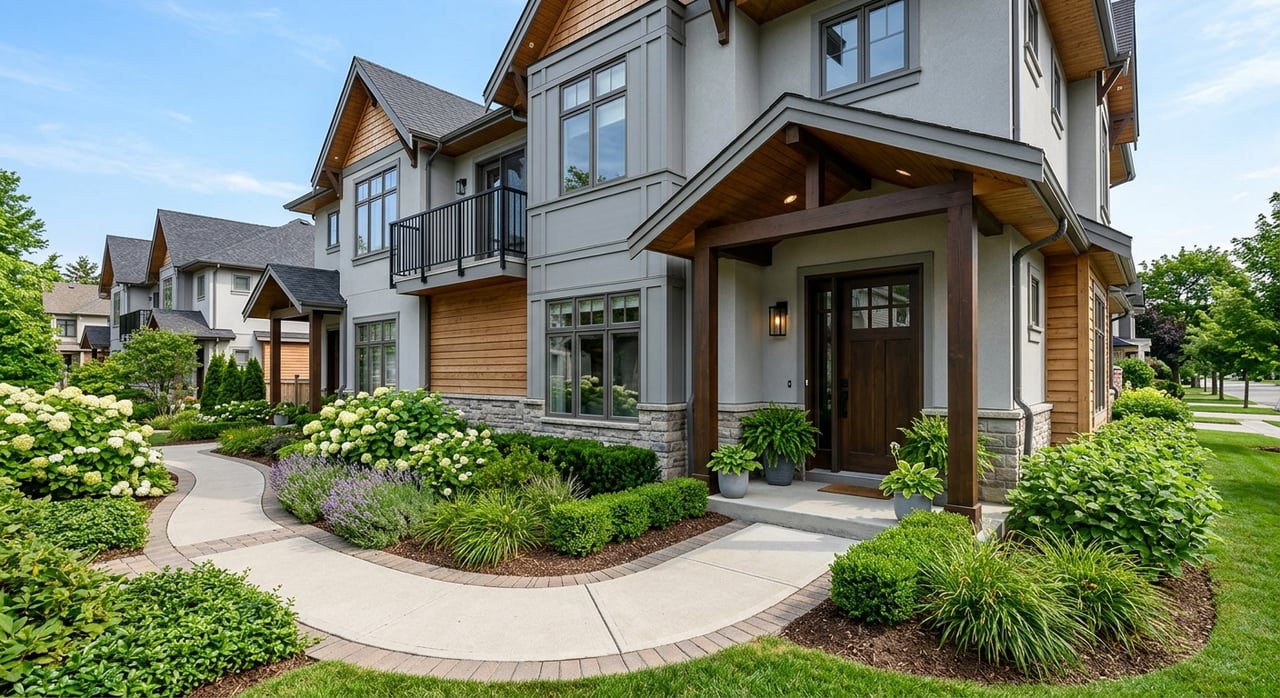
Are Center Valley Townhomes And Condos A Smart Buy?
April 23, 2026
April 23, 2026
If you are eyeing a townhome or condo in Center Valley, you are probably asking a very practical question: is it actually a smart buy, or just a tradeoff? That is a fair concern in a market where inventory is thin, prices vary widely, and HOA costs can change the math fast. The good news is that attached homes can make a lot of sense here, especially if you know how to evaluate the community, the monthly costs, and the building itself. Let’s dive in.
Center Valley is part of Upper Saucon Township, and the broader local market was still a seller’s market in February 2026. The median home price was $629,000, with 12 homes for sale and a median of 99 days on market, according to Upper Saucon Township location information and the market data summarized in the research.
For buyers focused on attached housing, the biggest challenge may be choice. Current inventory appears very limited, with one Center Valley townhome listing shown on Zillow and one condo listing shown on Realtor.com in the research snapshot. When supply is this tight, you may need to move quickly on the right property, but you also need to stay disciplined on value.
For many buyers, the biggest draw is lower-maintenance living. A townhome or condo may reduce the amount of exterior upkeep, lawn work, and snow removal you handle yourself, depending on the association structure.
That can be especially attractive if you are downsizing, relocating, or simply want a more manageable property. In Center Valley, this housing type can also offer access to the area at a price point that may be lower than some detached homes, though the gap is not always as large as buyers expect.
One of the most important things to understand is that not all Center Valley attached homes sit in the same price band. The research report points to a Woodcrest listing at 4658 Pinehurst Cir priced at $599,900 with a $600 monthly HOA.
At the same time, townhome sales on Huckleberry Drive and Waterford Drive ranged from $320,000 to $390,000. One Waterford Court townhome even advertised no HOA fees, which shows how much carrying costs can differ from one neighborhood to another.
That wide spread matters because the smart-buy question is not only about purchase price. It is about your true monthly cost of ownership, including dues, maintenance responsibility, and the risk of future assessments.
A lower list price can lose its advantage if the HOA dues are high. On the other hand, a higher sale price may still be attractive if the dues are modest and the association is well run.
Examples in the research report show just how broad the range can be:
If you are comparing a townhome or condo to a detached house, this is where you need to slow down and run the numbers carefully. Your mortgage payment is only one piece of the puzzle.
This is one of the most important questions you can ask before making an offer. Under Pennsylvania law, condo and planned-community ownership works differently from owning a detached home.
For condominiums, the default rule is that the association maintains the common elements and the unit owner maintains the unit unless the declaration says otherwise. For planned communities, which include many townhome neighborhoods, the same general framework applies. The Pennsylvania statutes on planned communities make clear that the governing documents are critical.
That means you should never assume the HOA handles the roof, siding, windows, decks, or drainage just because the property is attached. In one community, those items may be association responsibilities. In another, some or all may fall on you.
A community with low dues is not automatically a bargain. If the association is underfunded, you could be looking at future special assessments or rising fees.
That is why reserve funding matters so much. According to Community Associations Institute guidance on reserve studies, reserve studies help associations plan for major maintenance and replacement costs and reduce the chance of surprise assessments.
Before you buy, you should review:
This is where a practical review can save you from a costly mistake. A community with healthy reserves and clear maintenance standards may be far more attractive than one with artificially low dues.
If you are worried that townhomes and condos always appreciate more slowly, the local numbers tell a more balanced story. In the Lehigh Valley, attached homes have not consistently lagged detached homes.
According to the Greater Lehigh Valley Realtors 2023 annual report, townhouse-condominium prices rose 11.6% year over year compared with 5.9% for single-family homes. In the 2024 annual report, townhouse-condominium prices rose 9.0% compared with 8.5% for single-family homes.
That suggests attached homes can perform well when local demand is strong. In other words, the property type alone does not determine resale strength.
At the same time, it helps to keep the bigger picture in mind. National condo conditions were weaker in 2025.
Redfin reported that the median U.S. condo sale price fell 2.2% year over year in May 2025, while the median single-family price rose 0.5%. The same source also reported that in August 2025 there were 72.3% more condo sellers than buyers nationwide, compared with 29.7% more sellers than buyers for single-family homes.
For you as a buyer in Center Valley, the takeaway is not that attached homes are a bad bet. It is that resale may depend more on the specific community and monthly cost structure than on the attached-home label.
In Center Valley, a smart buy often comes down to a few practical details:
A well-run community with stable costs can hold buyer interest. A property with unclear upkeep responsibility, rising fees, or deferred maintenance can become harder to sell later.
Attached homes deserve a slightly different due diligence process than detached homes. According to the American Society of Home Inspectors, condo inspections may be limited to the unit itself, while shared spaces such as roofs, attics, crawl spaces, or elevators may not be included depending on the inspection agreement and local practice.
That means a clean inspection report does not always tell you everything about the building as a whole. You need to know what was inspected and what was not.
In Center Valley, these are some of the most important questions to answer:
You may also want to ask practical lifestyle questions, such as how sound transfer has been handled between shared walls. While that may not show up in a budget or disclosure, it can affect day-to-day comfort.
In many cases, yes. They can be a smart buy if you want lower-maintenance living, you are comfortable with HOA structure, and the numbers still work after you account for dues and long-term building costs.
They may be especially appealing if you are a downsizer or a busy professional who values convenience and wants less exterior upkeep. They become less compelling when the association is underfunded, the maintenance split is unclear, or the dues erase most of the cost advantage versus a detached home.
The key is to look beyond the list price. A smart purchase in Center Valley is usually the one where the community is healthy, the true monthly cost is clear, and the property condition supports long-term value.
If you want a practical, construction-informed opinion on a Center Valley townhome or condo, Jeff Adams can help you evaluate the property, the community, and the numbers before you commit.
Stay up to date on the latest real estate trends.
Trust him for expert real estate guidance rooted in deep local insight and seasoned experience. With his strong negotiation skills and client-first approach, he makes buying or selling confident, strategic, and seamless.

JEFFREY ADAMS
3120 Hamilton Blvd Allentown, PA 18103