In Coopersburg's Town Center, the Building Permit Is Not the Last Approval You Need
October 1, 2026
October 1, 2026
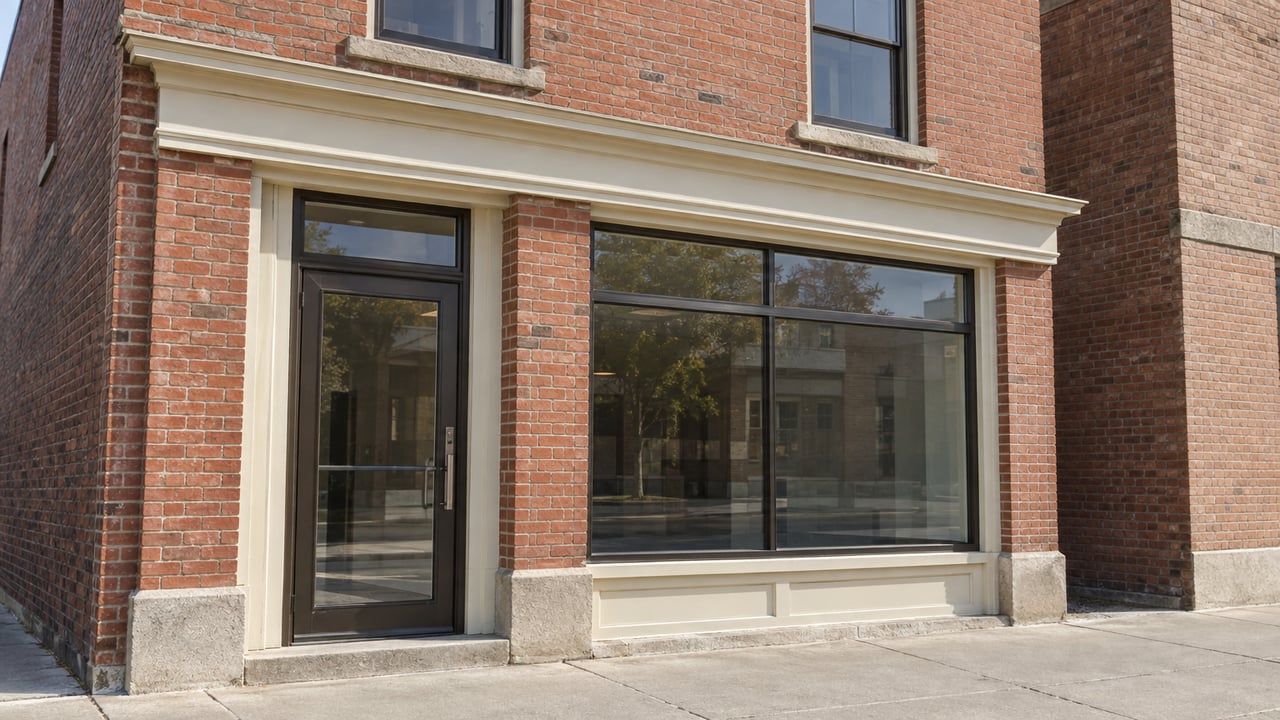
"Blank walls without at least one pedestrian door and one window are not permitted to face the front facade along a public street."
That single sentence sits inside Coopersburg's zoning code, in the section covering the borough's Town Center District. It reads like a throwaway design note. For anyone planning to renovate, expand, or resell a building along Main Street, it is closer to a warning label. The borough does not just check whether your construction meets code. It reviews what the building looks like from the sidewalk, and that review runs on a separate track from the building permit most people assume is the only approval standing between them and a finished project.
A standard renovation in Coopersburg follows the path most Pennsylvania homeowners already know: submit plans, pull a building permit, schedule inspections, get a certificate of occupancy if the use changes. That process is governed by the borough's adopted construction code and runs through the Zoning Officer and Construction Codes Official.
Inside the Town Center District, that is only one of two approvals. The borough's zoning ordinance, effective December 22, 2019 and enacted under Section 603B(2) of the Pennsylvania Municipalities Planning Code, layers a design review on top of the building permit for any exterior alteration, new construction, or signage change within the TC District boundary. The ordinance is explicit about why: the district includes properties on the National Register of Historic Places, and the borough wants a mechanism to keep exterior changes consistent with the streetscape those listings protect.
This is not a hypothetical for anyone flipping a storefront or updating a Main Street facade before a sale. It is a second submission, a second set of eyes, and in some cases a second timeline to plan around before the first coat of paint goes on.
The design guidelines attached to the zoning ordinance (Attachment 2, titled Historic Coopersburg Design Guidelines) get specific in ways a generic renovation checklist never does:
None of this touches wiring, framing, or load calculations. It is entirely about what the building communicates to someone walking past it, and it is reviewed as its own step.
The design layer is stricter than what a standard commercial zone requires, but the borough loosened a different rule to compensate. Most commercial development in Coopersburg has to landscape at least 10 percent of the lot. Inside the TC District, that requirement drops to 5 percent. The borough is not simply piling on paperwork. It cut the landscaping burden in half to leave more of the lot available for storefront frontage, then tightened control over what that frontage has to look like. It is a deliberate swap: less required green space, more required visual discipline.
Anyone picturing a formal Historical Architectural Review Board, the kind Pennsylvania's Historic District Act of 1961 requires in many municipalities, complete with a mandated seat for a registered architect, a licensed real estate broker, and a building inspector, will not find one in Coopersburg. That state law lets municipalities create a HARB with defined membership specifically to counsel on a certificate of appropriateness. Coopersburg went a different route. Its design review runs through the Zoning Officer directly. For a new principal building, the applicant submits a preliminary architectural elevation and a description of the proposed facade materials to that office. The Zoning Officer can refer the submission to the Borough Planning Commission or other borough staff and boards for review and comment, and Borough Council weighs the application's consistency with the Design Guidelines before anything is approved.
The practical difference is that there is no standing board with a guaranteed architect's seat reviewing every submission on a fixed monthly schedule the way there is in boroughs that adopted a formal HARB. Review happens through staff and council, which can move faster in some cases and slower in others depending on what gets referred out for comment.
The ordinance includes one safety valve. If the Construction Codes Official determines a condition is an immediate hazard to public safety, a permit can be issued before design review is complete. But the exception comes with a condition: any approval under this clause is limited to the minimum change needed to address the hazard, and if that emergency work required removing architectural details, those details have to be retained and reinstalled once repairs are done. The change still gets reviewed under the design section afterward, and the Zoning Officer can require the original details to go back up. A cracked cornice that is genuinely dangerous can come down fast. It is still expected to go back where it was.
Storefronts inside this corridor turn over. In August 2025, Coopersburg Bagels & Deli opened at 565 E. Station Ave, just off Main Street, in a space that had most recently housed AD's Kitchen, a Mexican restaurant. Co-owners Hector Sanchez and Angel Juarez had worked together at Johnny's Bagels & Deli locations in Bethlehem, and Juarez had spent more than a decade in food service in Manhattan before bringing New York-style bagels to the borough. The new spot kept interior seating for around 40 guests and added a covered porch out front.
That kind of turnover is normal for a small-town commercial strip, and it is exactly the kind of storefront that sits inside the TC District's footprint. Any future exterior work at that address, a new awning, a repainted sign, a facade update, would run through the same design guidelines described above, the same way it would for any other building on that stretch of Main Street.
If you're evaluating a Main Street property to buy as an investment, or scoping a renovation before you list, the district boundary matters before the design details do. Coopersburg's zoning map also includes an R-1/O district, created specifically to allow offices and similar uses along Main Street and in areas adjacent to the Town Center, while otherwise serving the same low-density residential purpose as R-1. A parcel that looks like it sits on Main Street is not automatically inside the TC District's design-review rules. Some of those addresses are zoned R-1/O instead, and the two districts do not carry identical review requirements. The first call before any exterior renovation budget gets set should be to the Zoning Officer, to confirm which side of that line a specific parcel falls on.
For sellers, this changes how a pre-listing renovation gets scoped. A repaint or a like-for-like repair rarely triggers the same scrutiny as a new build or a substantial facade change. But if the plan includes new signage, a new awning, exterior lighting, or anything that changes what the building shows to the street, that plan needs the design review timeline built in before a listing date gets set, not discovered after an offer is already in hand.
Does this apply to my house, or just the commercial storefronts on Main Street? It depends on how the parcel is zoned. The design review chapter is written specifically for the TC District. Properties mapped into the adjacent R-1/O district, created to allow offices along Main Street and near the Town Center, are a separate designation. Check the zoning map or call the Zoning Officer before assuming either way.
What if I just want to repaint or replace something exactly as it was? The ordinance's design review is aimed at new construction, signage, awnings, lighting, and alteration of exterior features, particularly anything visible from a public street. Straightforward like-for-like maintenance is a different conversation with the Zoning Officer than a facade change or new sign, and it's worth having that conversation before assuming either applies.
Is this the same as the sewer lateral inspection Coopersburg also requires at resale? No. The sewer lateral requirement is a separate, plumbing-focused inspection tied to a property transfer. The design review covered here is about exterior appearance and construction inside the TC District, and it applies whenever exterior work happens, not only at the point of sale.
If you're weighing a renovation on Coopersburg's Main Street corridor before you list, or sizing up a storefront property to buy, Jeff Adams has spent 30 years scoping construction projects before he ever priced a listing, and can help you map out which approvals come before the drywall, not after.
Stay up to date on the latest real estate trends.
Trust him for expert real estate guidance rooted in deep local insight and seasoned experience. With his strong negotiation skills and client-first approach, he makes buying or selling confident, strategic, and seamless.

JEFFREY ADAMS
3120 Hamilton Blvd Allentown, PA 18103