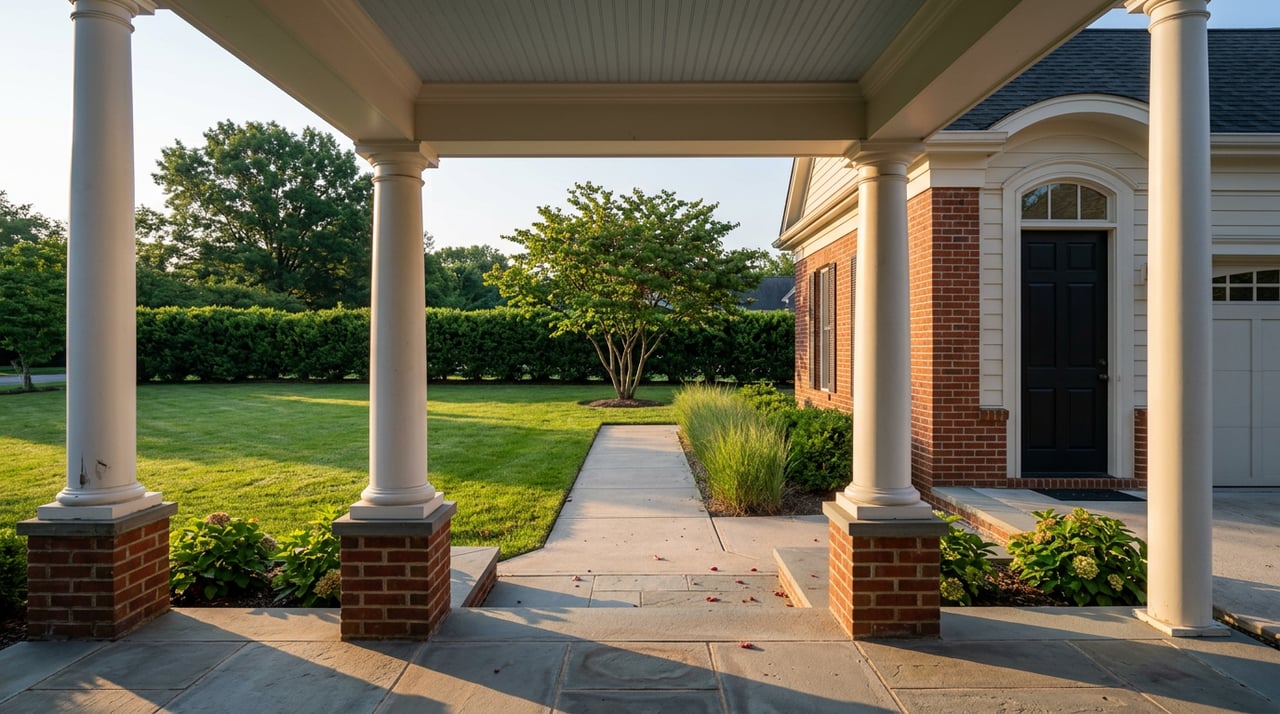
The Extra Two Weeks Center Valley's HOA Sellers Don't See Coming
September 17, 2026
September 17, 2026
You accept an offer on a Tuesday. Your agent pencils in a 30-day close. Title work starts, the inspection contingency runs its course, and everything looks like it's tracking toward a normal Lehigh Valley closing. Then someone asks whether the property sits inside a homeowners association, and the calendar you thought you had just picked up two more weeks you never budgeted for.
That's not a hypothetical for a meaningful slice of Center Valley's 18034 ZIP code. Detached homes on their own lots close on the same timeline any single-family sale would: title search, mortgage underwriting, the usual contingencies. But once a property sits under a recorded declaration, Pennsylvania law adds a step that has nothing to do with the condition of the house and everything to do with what governs the ground it sits on. It's called a resale certificate, and it's required under the state's Uniform Planned Community Act before a unit in a planned community can legally change hands.
Center Valley isn't a grid of identical single-family lots. Communities like Traditions of America at Saucon Valley and Stonewood Homeowners Association sit inside the same 18034 boundary as detached streets, and both are legally created planned communities governed by an HOA and a recorded declaration. That mix means a larger share of Center Valley's active listings carry this extra requirement than you'd find in a neighborhood built entirely on individually deeded lots. If you're selling in one of these communities, the certificate isn't optional paperwork you can skip. It's a statutory precondition to the sale.
Under 68 Pa.C.S. § 5407, once a unit owner in a planned community has a buyer, the association has 10 days from the date of request to produce a certificate covering the financial and legal state of the community: the current budget, reserve account balances, any planned capital expenditures, pending litigation involving the association, and whether the seller's own account carries any unpaid assessments or open violations. The Pennsylvania Association of Realtors has flagged this as a step listing agents should formalize with a written request the moment a contract is signed, precisely because associations are allowed to take the full 10 days and often do.
Ten days is already a real chunk of a 30-day close. But the certificate isn't the end of the clock.
Once the certificate reaches the buyer, Pennsylvania law gives them five days to cancel the agreement for any reason, no explanation required. That's a five-day window sitting inside your closing timeline where the deal can simply come apart, through no fault of the property, the price, or the inspection. Stack the 10-day production window on top of the 5-day rescission period and you get 15 days that only exist because the home is part of an association, not because of anything a buyer found wrong with it.
Here's how that plays out against a standard closing:
| Step | Detached home | Home in a planned community |
|---|---|---|
| Accepted offer starts the clock | Yes | Yes |
| Title search and inspection contingencies | Run in parallel with financing | Run in parallel with financing |
| Resale certificate requested | Not applicable | Must be requested in writing at contract signing |
| Association's response window | Not applicable | Up to 10 days under § 5407 |
| Buyer's rescission window | Not applicable | 5 days after receiving the certificate |
| Earliest safe closing date | Standard lender and title timeline | Standard timeline plus up to 15 days if requested immediately |
If the seller or their agent waits even a week to request the certificate, that 15-day cushion becomes 22 days, and a deal that looked like a clean 30-day close turns into something closer to seven weeks.
Traditions of America at Saucon Valley is a useful example because its own governing documents spell out exactly what a seller is dealing with. The community is organized as a Planned Unit Development under the Uniform Planned Community Act, not a condominium, which means § 5407 applies directly. For 2026, the HOA fee runs $400 per month per home regardless of unit type, covering lawn care, snow removal, trash collection, reserve fund contributions, and upkeep of common elements like the clubhouse and streets. A buyer is also assessed a separate reserve fund fee at the time of purchase, on top of the monthly dues.
Because Traditions is age-restricted, with at least 80 percent of homes required to have a permanent occupant 55 or older, there's a second checklist item layered on top of the statutory certificate: each resident must provide proof of age at closing, and again if occupancy changes later. That's not part of the § 5407 requirement itself, but it's another document that has to be gathered before the deal can close, and it catches sellers off guard just as often as the certificate does.
Stonewood Homeowners Association, also inside the 18034 boundary, is governed by the same statute. The mechanism isn't unique to one age-restricted product. It's built into how Pennsylvania regulates any planned community, and Center Valley has more of that housing stock than a quick look at a listing photo would suggest.
If your Center Valley home sits inside an HOA or planned community, the paperwork clock starts the day you accept an offer, not the day someone remembers to ask about it. A few things worth building into your plan before you list:
None of this changes what your home is worth. It changes when you'll actually see the proceeds, and a seller who plans for the extra two weeks rarely feels it. A seller who doesn't ends up explaining a delay to a buyer's lender the week before closing.
Does this apply if I'm selling a detached single-family home in Center Valley? No. The resale certificate requirement under 68 Pa.C.S. § 5407 only applies to units inside a legally created planned community governed by a recorded declaration. A detached home on its own deeded lot, with no HOA, follows the standard closing timeline.
Can I request the certificate before I have an accepted offer? Some associations will process a request early, but the statute ties the process to a sale, so most boards won't start the clock until there's a signed agreement. The safer approach is to have your agent submit the request in writing the same day the offer is accepted.
What if the buyer cancels during the five-day window? That's their right under the statute, and it applies regardless of the property's condition. It's one more reason to get the certificate moving early, so a cancellation happens with enough runway left to remarket the home if needed rather than at the eleventh hour.
If you're weighing a listing in Center Valley this fall and want to know exactly what your specific property, HOA or not, will need before it can close, Jeff Adams has spent 30 years on the construction side and the sales side of Lehigh Valley real estate, which means the paperwork gets planned for as carefully as the pricing. Reach out for a free home valuation and a closing timeline that accounts for every step your property actually requires.
Stay up to date on the latest real estate trends.

Trust him for expert real estate guidance rooted in deep local insight and seasoned experience. With his strong negotiation skills and client-first approach, he makes buying or selling confident, strategic, and seamless.

JEFFREY ADAMS
3120 Hamilton Blvd Allentown, PA 18103